Category Archives: Uncategorized
Erica had a nice time celebrating her birthday with her family

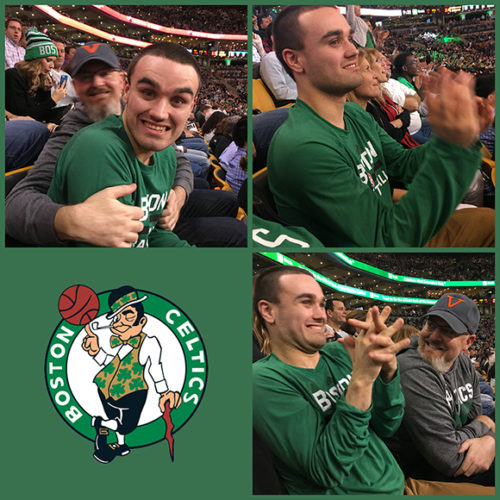
Fun events planned this month include a Celtics game, bowling field trip, and a Dave & Busters outing

Aliyah is doing a wonderful job helping out in our Admissions department

Join us for a 6 week American Sign Language course starting today!


Fun time cheering on the New England Revolution!

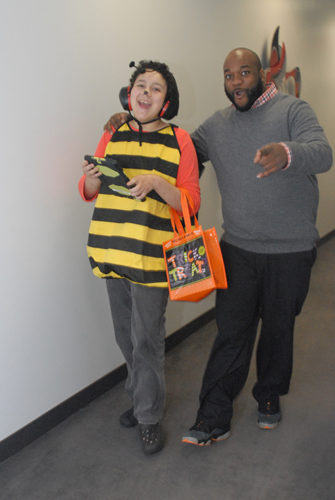
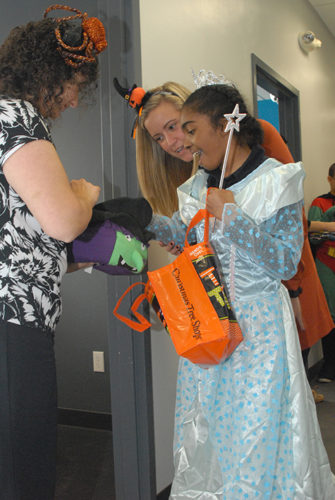
A few students enjoying some of the interesting things to do at JRC

Happy Birthday to all our students celebrating this month!

Please Don’t Take Away My Autistic Son’s Treatment
The Wall Street Journal
COMMENTARY
The FDA might ban the harmless skin shocks that keep him from self-injury, though they have worked.
Paul E. Peterson
June 23, 2016 7:01 p.m. ET
Though they have never met my son David and have no information about his specific diagnosis or care, bureaucrats at the Food and Drug Administration are endangering his life by proposing to stop the one treatment that has allowed him to lead a happy life that includes learning, socializing and having loving relationships with his family.
David is one of a small percentage of individuals with autism and mental disabilities who engages in life-threatening self-injurious behaviors, including shoving his hands down his throat and banging his head with such force as to permanently damage his ear. For the past 10 years he has been dissuaded from such activity by means of an abundance of rewards if he controls his self-harming behavior and an unpleasant, but harmless, two-second skin shock via an electronic stimulus device, or ESD, if he attempts self-injury.
While the device has been used effectively for many years with individuals like David at the Judge Rotenberg Educational Center, a residential special-needs school in Canton, Mass., the FDA is trying to ban it at the behest of ideologically driven advocacy groups such as the Disability Law Center in Massachusetts, whose executive director calls the therapy “horrible torture.”
Amazingly, the FDA says similar therapy is allowable if it is used to deter cigarette smoking.
Denial to my son is justified on the grounds that he doesn’t have the same ability as smokers to decide whether or not to receive aversive treatment. But that specious argument could be used to ban all medical treatments for people with intellectual disabilities for any condition whatsoever. It is standard practice to give people like David the same treatment others would receive as long as the consent of parents or guardians is obtained. As a further protection, all ESD treatments at David’s school must be approved by a probate judge. Further, David receives an abundance of rewards for controlling his behavior, and he is under the constant supervision of a dedicated, caring team.
Denying treatment to people with disabilities when it is available to others violates the equal protection clause of the 14th Amendment. In its 1997 ruling in Judge Rotenberg Educational Center Inc. v. Commissioner of the Department of Mental Retardation, the Massachusetts Supreme Judicial Court unanimously affirmed a lower-court finding of contempt against the Commonwealth of Massachusetts for its interference with the use of electronic stimulus devices. The FDA’s proposal ignores that decision.
The FDA claims that alternative treatments are available. It is wrong. After trying many other institutions and therapies, including the drugs Mellaril, Thorazine, Haldol, Ritalin and Noctec, David in 1988 entered the highly regarded Neurobehavioral Unit at the Kennedy Krieger Institute that specializes in the treatment of self-injurious behaviors. Specialists explored a wide variety of treatment protocols, including various drug therapies. After four months, the center’s experts, finding no effective alternative, agreed that placement at the Judge Rotenberg Educational Center was the best available option for David. Our local school district authorized the placement.
The FDA asserts that skin shocks are no longer necessary but it provides no documentation that drugs are effective for people like my son. In the past, drug therapy aggravated David’s self-injurious behavior. The use of psychotropic drugs also poses multiple risks of physical and psychological side effects. By contrast, skin shocks have no demonstrated side effects beyond a temporary redness to the skin that usually disappears within minutes.
The FDA also asserts that the skin shock constitutes physical and psychological harm. My wife and I have both experienced an ESD application. The experience is disagreeable, but not nearly as painful as a paper cut to the finger. Nor have we detected any sign of psychological damage to our son. Quite the contrary: David loves to visit his family, and he is no less happy to return to his friends in the residence where he lives.
Before arriving at his special-needs school, David’s attempts at self-injury were continuous unless he was physically constrained. Today, he is in excellent physical health, and he has made striking gains in his sociability, curiosity and ability to carry out basic self-care. He participates in community events and visits his family about once a month. His attempts at self-injury average once a week, a low level he has sustained for the past several years.
Our son, who is now 45 years old, is enjoying a quality of life that my wife and I did not believe was possible before he had access to this treatment. The FDA’s proposal would place his health—and life—at risk. The alternative treatment plan for him is physical restraints and mind-numbing drugs. For the sake of our son and others like him who have benefited from an electronic stimulus device, the FDA must withdraw its proposed regulation.
Mr. Peterson is a professor of government at Harvard University where he directs the Program on Education Policy and Governance.
http://www.wsj.com/articles/please-dont-take-away-my-sons-treatment-1466722896
A Mother’s Story
Ms. Lorraine Slaff is the mother of identical twins, Stuart and Matthew. Matthew, now 41, came to JRC shortly before turning 17. Stuart has never attended JRC. Ms. Slaff sat down recently with JRC staff to discuss her sons’ situations.
She says Matthew has done “very well at JRC. He’s very happy, he’s able to pursue various interests. He loves going to the Science Museum, he enjoys looking at birds and going to zoos. He loves classical music.”
Before he came to JRC, Matthew was “in a hospital for over five months, nobody wanted him. He cracked his head against sharp points.” The (NYS) Board of Education “begged me to sign him out of education, which I refused. The hospital didn’t want him. He was in there originally for plastic surgery because he split his head” so badly “you could look into his head.” They “finally corrected that, and they still gave him a lot of medication” and kept staff with him 1-to-1, but if it wasn’t a male staff, “he’d go ahead and bang his head again.” He’d need more stitches each time.

At JRC, “he’s doing fabulously well.” Matthew has a “very structured situation.” With the video monitoring, JRC staff can “watch [even] when he sleeps. He’s watched, and he’s safe, and he tells me he feels safe. Because he’s watched so closely” and kept from self-harming behaviors, “he’s able to enjoy all the things that he likes and he hasn’t been able to before.”
“His identical twin, Stuart, was doing very well, had a job, and worked, when he came out of his school program – he was also in a handicapped program – he had a job for a few years, took public transportation [to it]” but then he lost the job, and is “now on so many medications, his body has swelled up, he’s had a grand mal seizure from the medications, during a snow storm; I wasn’t even able to get to him. He’s become more and more dangerous; he can’t even go to my house [or] to family gatherings. He’s dangerous. I took him out recently, he put his hands around my neck in a restaurant. It’s terrible.”
Mrs. Slaff continues: “The other one [Matty] is doing so well, I can take him out – I never have any of this trouble with Matthew, but Stuart is a mess, a complete mess. Lately he has hardly gone to his day program, he claims he is too tired. They give him too much medication, and in addition to that he’s had many psychiatric hospitalizations, and I know the bills [from the medications and hospitalizations] are very very high.”
“I’m very happy [with Matthew’s situation at JRC] and my whole family is happy. My daughter, who is a psychiatrist with a fellowship in autism, says that this is the only program that is good for somebody with the kind of behaviors that Matthew has shown, and she wishes that Stuart could have access to such a program.” However, the state won’t authorize it, and “insists that the medications and the psychiatric hospitalizations is the way to go.”
“I visit [Matty] approximately once every four weeks and we spend weekends together; he loves to go out, we go to various places around Boston. Stuart, I stopped taking with me, because he’s too dangerous. The house where he lives, they’re very kind people, but they can’t do very much because they’re not equipped” to do anything other than medicate him. The laws in New York State are “causing people to become overly-medicated” and the rules in New York “say no, you can’t do that” [use behavioral methods] “and when you can’t do that, you wind up on medication when you can’t follow a behavior program.”
If your children “have severe, health-threatening behaviors, [JRC] is the only place for them.” With Stuart, who “says [himself] he’s not clear”, because he’s an adult, the program he’s in gives him whatever he asks for, such as “extra portions [of food]”, for instance.
“But Matthew is thin, he looks good, he’s alert; [Stuart] says ‘I have to sleep, I can’t go to program’” because of the medications. And “despite all the medications, he’s wound up in the hospital periodically.”
“Matthew is a happy person, but Stuart is absolutely miserable. They’re giving him what he wants, but he’s miserable, because he knows he wants somebody else in charge, and there is nobody in charge except him, and he knows he’s not capable of being in charge [of himself].”
“I’m very happy with Matty. Most of his tics – and he did have tics, from all the medications – went away. He’s doing very well, he’s very content. He’s no longer overweight from medications, and he’s just a happy happy person.”
“When I speak with my other son, he tells me he’s going to throw himself on the train tracks … he’s gone across the street without looking and almost got killed by a car, and took a swing at a passerby. There’s day and night between the two of them, and they’re identical, they look just alike.”
“I know Matty is so happy, and Stuey is so miserable. That’s the difference. I just love being with Matthew, and I cringe when I have to be with Stuart. I never know what he’s going to do. Matthew, I can take into restaurants, I can take him to shows, music, anything. But Stuart, nothing. Absolutely nothing. Just a lot of medication. He’s going nowhere and it’s very very scary to me. Sometimes I feel like he’s dying a slow death. I sign for the medications because I feel I have no choice, but I know what the side effects of these medications are. They’re pretty bad, like the grand mal seizure he had, and the overweight when diabetes runs in my family.”
“I feel bad and I can’t reason with him; he’s not a reasonable person. He talks, but he says himself, ‘I’m not clear.’ At least I’ve got one son who’s doing all right, but I wish both of them were. If there was any way to get Stuart into a program like [JRC] it would be wonderful. But all they have is drug programs, and the bill for the drugs and the hospitalizations is very very high. So, when they tell me they’re saving money by not having behavioral programs, that’s not true.”
Thank you, Mrs. Slaff, for speaking with us, and for your continuing support of the work that allows Matty to have a good life here at JRC.